



The remarkable summer just ended, with its record heat and drought and its horrific wildfires across Europe, has perhaps for the first time given many people the chilling sense that climate change is gathering pace. After thirty-five years of being warned by scientists that global warming was coming, and perhaps disregarding or even pooh-poohing it, now we can see the threat all too clearly.
But it’s more than just a threat. Large-scale harm from extreme temperatures has already started. The summer just gone has very probably done terrible damage to one particularly attractive section of British wildlife, which will not be apparent until next year. And that is British butterflies.
Now here’s a paradox: in Dorset, as elsewhere, it was actually a wonderful summer for butterflies, certainly in our village and indeed in our garden. It was helped by the fact that in Britain 2026 was a ‘painted lady year’; we had an enormous influx of those lovely orange-and-black migrants from Africa which annually traverse all of Europe. We had them in the garden day after day. But we also had many other lovely things and on one day I counted nine species: the aforesaid lady, but also red admiral, peacock, comma, small white, large white, meadow brown and gatekeeper, plus a fleeting glimpse of a clouded yellow. The baking sun was perfect for the adult butterflies to bask and feed in.
But at the same time, that hot sun it was doing something else: it was withering the grasses and nettles and other plants on which the caterpillars of those adults—the next generation—were meant to be feeding, which may well mean they will not survive to overwinter and emerge next year. We know this because the last time we had a similar summer of long and extreme heat, in 1976, that is exactly what happened. The following year British butterflies suffered a terrible crash: one species, the chequered skipper, went extinct in England (though surviving in Scotland); another, the large blue, was reduced to a single site, from which it went extinct a couple of years later; and a whole series of other once-common species, such as the fritillaries and some of the blues, suffered enormous and widespread losses from which to this day they have never really recovered.
One of our leading butterfly scientists, Dorset-based Dr Martin Warren, who was previously head of the charity Butterfly Conservation, watched it happen in 1977 and sees it happening again next year. “I’m absolutely sure there will be a big crash in a lot of species,” he said. “I think numbers will go down for at least half of them, if not more than that, depending on their life cycle.”
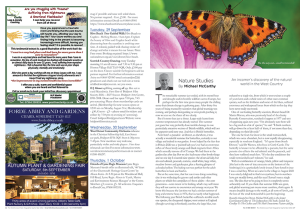
The one he fears for most is the small tortoiseshell, which was once abundant, but is now rapidly disappearing, especially in southern England. “It’s gone from South Dorset,” said Dr Warren, who lives in Corfe Castle. The butterfly is known to be affected by a parasite, but the same parasite also affects the red admiral and the peacock, and they have suffered much less. “It’s the dry conditions the small tortoiseshell can’t tolerate,” he said.
With its combination of orange, black, yellow and turquoise (this last in the row of tiny crescents on the bottom of the hindwings) it is a particularly lovely insect; I have loved it since I was a small boy. When we came to the village in August 2021 I was utterly delighted to find it everywhere; but its numbers have got steadily lower, and this year I haven’t seen a single one. The idea that we’re going to lose it completely seems unbearably sad. If you think that summer 2026 was great, and global warming just means more sunshine, think again. It means dreadful damage to the world, at all sorts of levels, and the loss of the small tortoiseshell is just the beginning.