



While we celebrate 25 years in print, Dr Sam Rose highlights 25 years of the R-Word.
Well, technically not 25 years of this column, but I thought that to celebrate the 25th year of the splendid Marshwood Vale Magazine, I would write about the some of the rewilding that has been breaking ground (so to speak) in the UK over the same time period. Notably those that I have visited so that could also share some photos.
In fact, it’s worth reminding people that rewilding, or wilding, is not some ‘woke’ concept made up by the liberal, Guardian-reading muesli-eaters, it’s a concept first used in the late 1980s and early 1990s by Dave Foreman, the American environmental activist who co-founded Earth First! and later the Rewilding Institute. He formalised the word in 1992, and the concept was then described in detail in a publication by US academics Michael Soulé and Reed Noss in 1998.
These two splendid pioneers were also the first to try to define it, which they said is “the scientific argument for restoring big wilderness based on the regulatory roles of large predators”, involving “1) Large, strictly protected, core reserves (the wild), 2) Connectivity and 3) Keystone species.”. The problem for the UK is that we have no ‘large strictly protected wild areas’, limited connectivity and no large predators, so maybe it needed a rethink.
This rethink, which I am calling the ‘European rewilding paradigm’ came from an idea loosely called the Wood Pasture approach and was proposed by Frans Vera, a Dutch ecologist, in the 1970s and 80s. It was based on the idea that pre-settled Europe (including the UK) was not a continuous forest as previously thought, but an ever-changing mosaic of woodland, scrub, pasture, wetland, heaths and so on. This was then ecologically ‘engineered’ by herbivores and herbivore/carnivore interactions to create very high levels of biodiversity before Homo sapiens stuck their oar in and got busy with all their pesky tools.
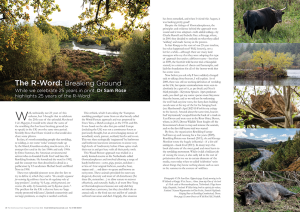
This Wood Pasture approach was trialled in a newly formed reserve in the Netherlands called Oostvadersplassen and involved allowing a range of hardy herbivores—cows, pigs, ponies, red deer—in lieu of their original forbears, aurochs, boar, tarpan and … red deer—to graze and browse an ecosystem. These animals provided the necessary dispersal, diversity and most of all disturbance (the three Ds, remember…) to allow nature to recover effectively, and naturally. Sadly, it all went Pete Tong in Oostvadersplassen because not only did they not introduce carnivores, but they also didn’t do an annual cull, so the food ran out and lot of animals suffered starvation and died. Happily, this situation has been remedied, and when I visited this August, it was looking pretty good!
Despite the failings of Oostvadersplassen, the principles and evidence behind the approach were sound and it was adopted—with added culling—by Charlie Burrell and Isabella Tree at Knepp, where, in 2001 they decided to embark on what they called ‘wilding’ and made history in the process.
In fact Knepp is the start of our 25-year timeline, but what happened next? Well, honestly, not a lot for a while—although there are many land managers who say that they were adopting this type of approach but under a different name—but then in 2009, the Scottish wild beaver trial at Knapdale started, to a mixture of cheers and harrumphs, and laid the foundations for all of the beaver work that has come since.
Now before you ask why I have suddenly changed tack to talking about beavers, I will explain. As of 2009, there was still no working definition of rewilding in the UK, but species reintroductions were seen to absolutely be a part of it, as per Soulé and Noss’s third principle—Keystone Species. Apex predators aside, you don’t get any native species more Keystone than the beaver, and as we will not be welcoming the wolf back anytime soon, the furry dam-building rascals were at the top of the list for bringing back (see Marshwood’s April 2023 R-Word for my eulogy to the beaver). Around about the same time, beavers had ‘mysteriously’ escaped from the back of a truck in East Devon and were seen in the River Otter, Devon, where, in 2015, Devon Wildlife Trust fought off the Government’s desire to trap and remove the animals, and so the first full beaver trial was started.
By then, the organisation Rewilding Europe had been up and running for a few years (2009), Rewilding Britain was formed (2015), oh and George Monbiot wrote the hugely influential—if a bit self-indulgent—book Feral (2013). In many ways this book did some of the most good and most harm to the rewilding movement. Whilst it did a brilliant job of raising the issues, it also sadly led to the sort of polarisation that we see in certain elements of the media, even today when so-called ‘celebrities’ write about things they know nothing about; such as seen in the summer in the context of wildfires.
But Feral was in many ways a second starting point, and things started to get busy from there. The book about Knepp, Wilding, was published in 2018, and has changed lives all over the world since. The Scottish beavers went from strength to strength, and likewise the beavers in the Otter valley. Also in England, White-tailed Eagles were reintroduced on the Isle of Wight by the Roy Dennis Wildlife Foundation and Forestry England. They had come back to Scotland some time ago, but bringing then back to densely populated Southern England was a major step.
On top of this, rewilding projects started to pop up all over the place—most notably Wild Ken Hill in Norfolk, which started in 2019 and has become famous from BBC’s Springwatch and Autumnwatch 2021-2023. The Glen Feshie and Alladale estates in Scotland were also coming into their own, alongside the 11,000-acre Wild Ennerdale project in the Lake District.
By now, people were trying to define it—Dr Nathalie Petorelli from the Institute of Zoology and pals used “the reorganisation of biota and ecosystem processes to set an identified social-ecological system on a preferred trajectory, leading to the self-sustaining provision of ecosystem services with minimal ongoing management, 2018”, which I find a bit too academic, so I prefer the following Rewilding Britain definition:
“Rewilding is the large-scale restoration of ecosystems to the point where nature is allowed to take care of itself”. They add “Rewilding seeks to reinstate natural processes and, where appropriate, missing species—allowing them to shape the landscape and the habitats within. It’s focused firmly on the future although we can learn from the past.”
Moving forward, covid lockdown showed people what can happen if some of the barriers to nature moving freely are removed, with deer and boar in villages, and birds being heard over the ‘no-traffic’ noise. But there have also been some other great milestones since:
In 2021: The UN Decade on Ecosystem Restoration begins, and the IUCN publishes guiding principles for rewilding. Also, closer to home, Wild Woodbury starts in Dorset, and within three years more than 1,900 species have been recorded on the site, which was formerly sterile arable farmland.
In 2022: European bison return to Britain in Blean Woods, Kent (and in 2026 Bison were also introduced to an estate in Cumbria). Also in the same year, the Kunming-Montreal agreement sets the global ‘30 by 30’ target to protect 30% of land and sea by 2030, and rewilding is identified as playing a key role in that.
In 2023: The Archers started a Rewilding Ambridge storyline, Wildcats were released in the Cairngorms, and West Dorset Wilding received approval for the Brit Valley Project, in which there will be over 1,000 hectares of Wood Pasture created (shameless plug).
And perhaps the most significant win, in 2025, Natural England approves licensed wild beaver releases, and the first goes ahead in Purbeck, Dorset.
So it has been a busy 25 years. Rewilding, or wilding, is no longer a fringe activity, it is not even so much a movement, it is now mainstream and very much seen as a part of the land management toolkit. But whilst I am very much a supporter, I am also a firm advocate of doing the ‘right thing in the right place’, which I think will be an important factor for the next 25 years, the way the planet is changing, in which more sustainable agriculture and nature recovery will need to work hand in hand.
Dr Sam Rose is a photographer and podcaster about nature and rewilding—see his website at whatifyoujustleaveit.info and increasingly out of date podcast “What if you just leave it?”. He is also CEO for the charity West Dorset Wilding (westdorsetwilding.org) and Project Director Brit Valley Project (britvalley.org) but the views expressed here are personal and are not said on anyone else’s behalf.