



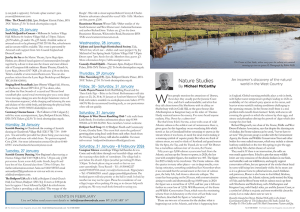
When people mention the attractions of Dorset, these days they usually put the Jurassic Coast first, and that’s understandable; and after that they talk about towns like Sherborne with its abbey or Shaftesbury with its Gold Hill, or the great houses like Athelhampton or Kingston Lacy, or the relics of Thomas Hardy scattered across the county. I’ve never heard anyone exclaim, Wow, Dorset has a salmon river!
But that’s how I feel. For me, a river with a run of wild Atlantic salmon is the noblest sort of watercourse there is, given grace by this legendary ocean-wandering fish which travels as far as Greenland before returning to spawn in the stream where it was born, its need for clean water making it a stunning symbol of aquatic purity. But when we think of salmon rivers, we tend to think of Scotland and grand waters like the Spey, the Tay, and the Tweed, do we not? Yet Dorset has a marvellous salmon river of its own, the Frome.
Fifty years ago 3,000 salmon a year came back from the Atlantic and ran up the Frome to spawn; in 2024, the last year with complete figures, the number was 405. The figure for 2025 is likely to be even lower. The Frome salmon—like the species in many other places—are in deep trouble, even facing extinction, something underlined last November when it was revealed that the annual count in the river of salmon parr, the baby fish, had shown a dramatic collapse. The count has been going on for 20 years, with conservationists aiming to catch and electronically tag 10,000 parr; in 2024 the figure was a record low of 4,593, and last year it fell even further to a new low of 3,226. Will Beaumont, of the Game and Wildlife Conservation Trust, which runs the monitoring scheme from its laboratory on the river at East Stoke near Wareham, described the figure as ‘catastrophic.’
There are two sets of reasons for the decline: what is happening out in the Atlantic, and what is happening here in England. Global warming probably plays a role in both, with higher water temperatures perhaps leading to shifts in availability of the salmon’s prey species in the ocean, and heavier winter rainfalls making conditions challenging in the spawning streams. In the Frome itself there is a real problem with runoffs from farmers’ fields, with excess silt covering the gravels in which the salmon lay their eggs, and nitrate and phosphate driving the growth of algae which also swamp the river bed.
Richard Illingworth, vice chair of the Frome, Piddle and West Dorset Fisheries Association, says that despite the alarming rate of decline, the Frome salmon can be saved, “but we have to act now.” His pressure group is in talks with the Environment Agency, the Game and Wildlife Conservation Trust and other bodies for some radical measures, which may include a salmon hatchery established on the river this spring, to give the eggs and the baby fish a better chance of survival.
They need it. If there is no intervention, the odds are very much against them. I find it a pity that many wildlife lovers are very conscious of the drastic declines in our birds, our butterflies and our wildflowers, and eagerly support conservation efforts, but are ignorant of the similar threat faced by some wild beings less immediately visible. So be aware: just as it is a glorious home to yellowhammers, marsh fritillaries and primroses, Dorset is also home to that fabled, fabulous, righteous creature, the Atlantic salmon, justly termed the King of Fish; and the River Frome with its salmon run is up there with Sherborne and Shaftesbury, with Athelhampton and Kingston Lacy, with Hardy’s relics, yes and the Jurassic Coast, as a symbol of all that is majestic and most worthwhile about the county. Let us make damn sure we save it.