



Fergus Dowding’s sense of humus
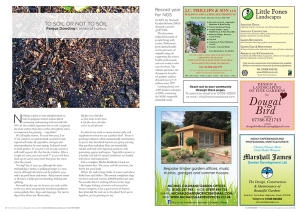
Nothing is quite as sexy and glamorous as soil, its gorgeous brown colour full of excitement and teeming with invisible life. 59% of the world’s organisms live in soil: it captures far more carbon than trees or the atmosphere and is so important for growing… vegetables!
It’s all highly humus. In your first year, 2 or 3″ of compost or animal muck on tired or new topsoil will make all vegetables stronger and more productive by next spring. It doesn’t need to look perfect. If you put it on in early winter, it will build organic life that breaks it down. After a couple of years, you only need 1″ as you will have built up an active ecosystem that gives the roots what they need.
No dig? Yes, if you can, although the term minimal dig is better, as pulling parsnips is a non-starter, although all carrots can be pulled if your soil is in good heart and moist. Keep carrots moist at all times, it helps prevent bending, forking and splitting.
Ground beetles are my heroes, not only visible to the eye, they are generally beneficial predators eating aphids, flies, slugs and slug eggs. Try not to dig or hoe them out. Remember,
Big fleas have little fleas
on their backs to bite them.
Little fleas have other fleas
and so on ad infinitum.
So why do we need so many vitamin pills and supplements when we eat a perfect diet? There is growing evidence, often commercially unattractive, to prove that beneficial bacteria are going missing. Our gut flora and plant flora are remarkably similar and help with digesting nutrients and protecting against pathogens. Vegetables grown in a healthy soil full of natural antibiotics are loaded with these vital ingredients.
Soil is complex, Merlin Sheldrake’s book on fungi shows that. The more soil life you have, the better for your body.
Often, the soil in large fields of maize and wheat looks bare and lifeless. The owner complains slugs eat their seed and scatters 200,000 pellets per acre. No wonder there’s nothing left to eat the slugs.
Be happy looking at brown soil covered in brown compost, it has a great sense of humus. Just what did the soil say to the plant? Let’s get it together, you’re growing on me.